Interiorismo en otoño: Principales tendencias para espacios comerciales
Tendencias de interiorismo de otoño: Ideas para transformar espacios comerciales en Barcelona El otoño nos invita a redescubrir los espacios interiores. La luz cambia, los


Barcelona has always had a close relationship with architecture, design and the way people experience urban spaces. From the architectural heritage of the Eixample to contemporary hospitality concepts, the city has developed an unmistakable visual character where history and innovation coexist. Today, that relationship is becoming increasingly visible in commercial spaces. Restaurants, hotels, cafés, shops and other businesses are using Barcelona interior design not simply to create attractive environments, but to communicate who they are, connect with their customers and become part of the identity of the neighbourhood where they operate.
For a business opening or renovating a commercial space in Barcelona, interior design therefore represents much more than an aesthetic decision. The architecture of the premises, the materials, lighting, layout, atmosphere and relationship with the surrounding street all contribute to the way customers perceive the brand. A well-designed space can feel connected to Barcelona without relying on clichés, while a poorly considered intervention can make an otherwise interesting business feel disconnected from its location.
This is why the work of an interior design studio in Barcelona increasingly involves understanding both the individual business and the city in which that business operates.
One of the characteristics that makes Barcelona particularly interesting for commercial interior design is its architectural diversity. A business can operate within a modern building, a traditional Eixample property, an industrial space, a historic premises or a completely contemporary development, and each context offers different opportunities.
The challenge is not to reproduce a generic idea of Barcelona in every project. Quite the opposite. The most interesting commercial interiors often emerge when designers understand the specific character of the building and its surroundings before deciding how the interior should look.
An original architectural element can become part of the identity of a restaurant. A particular ceiling height can influence the atmosphere of a hotel lobby. The relationship between a shop and the pavement can determine how customers perceive the business before entering. Even the amount of natural light entering through the façade can influence the selection of materials and the distribution of the interior.
This approach creates spaces that feel rooted in their surroundings rather than simply decorated according to an international trend.
The role of a commercial space has changed considerably. Customers no longer interact with a business only through its products or services. They experience the brand through every physical and digital touchpoint.
The entrance is part of the brand. The reception is part of the brand. The restaurant table, the lighting, the bathroom, the waiting area and even the wayfinding system are part of the brand.
For this reason, commercial interior design in Barcelona increasingly needs to consider the entire customer journey. A customer should understand the character of a business progressively, from the first visual contact with the façade through to the moment they leave.
This does not mean that every space needs to be spectacular or visually complex. Sometimes the strongest identity comes from a very restrained material palette, carefully controlled lighting and a clear spatial concept.
What matters is coherence.
When the physical environment communicates the same values as the product or service, the customer experience becomes considerably stronger.
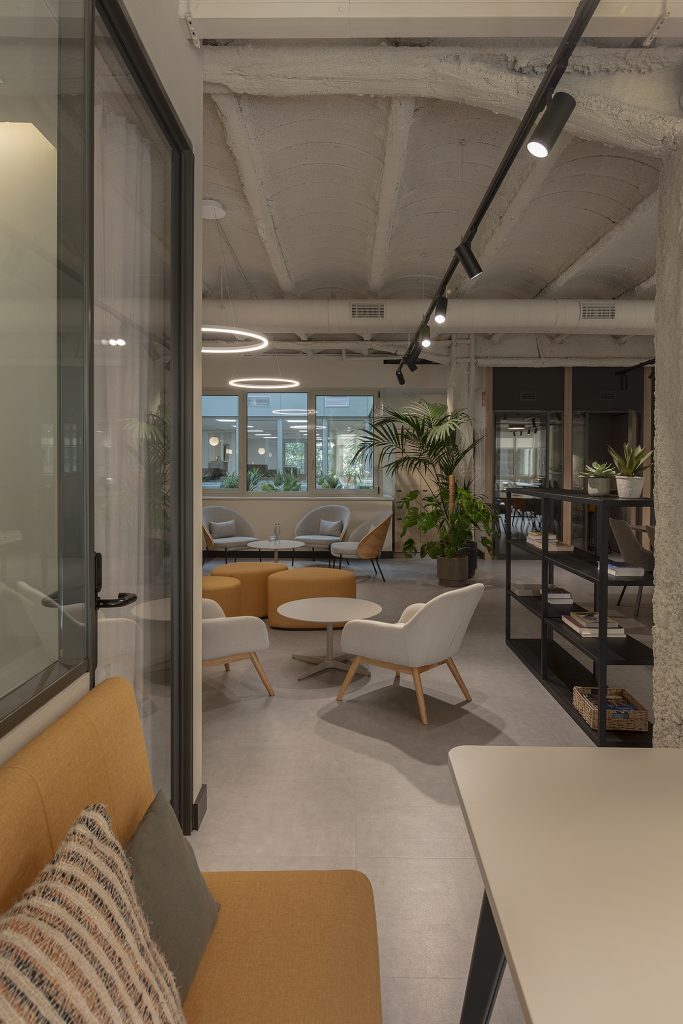
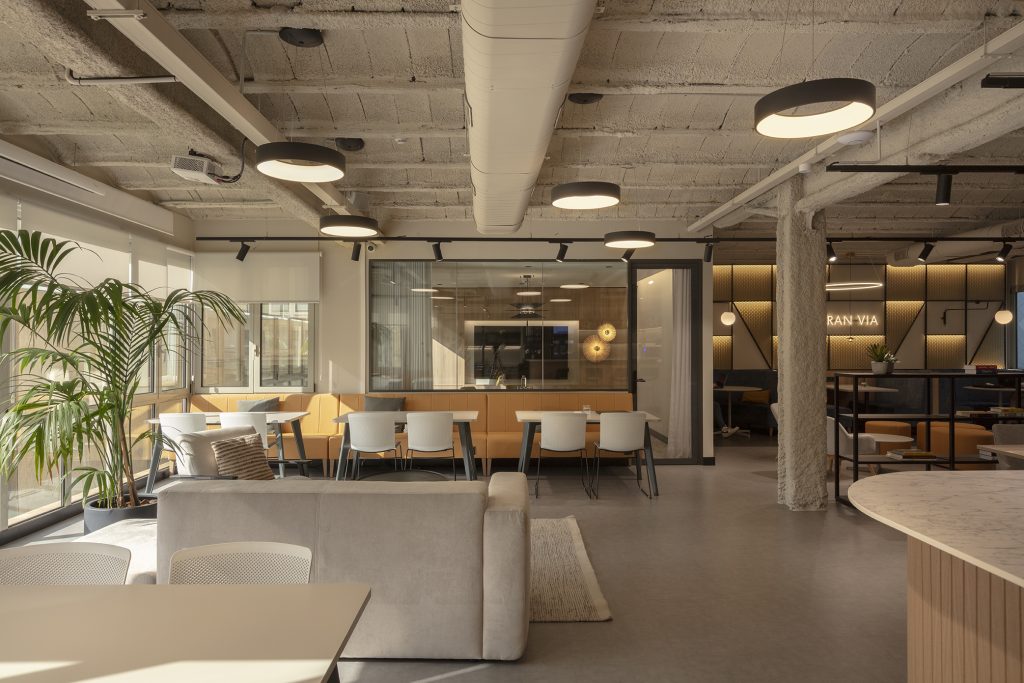
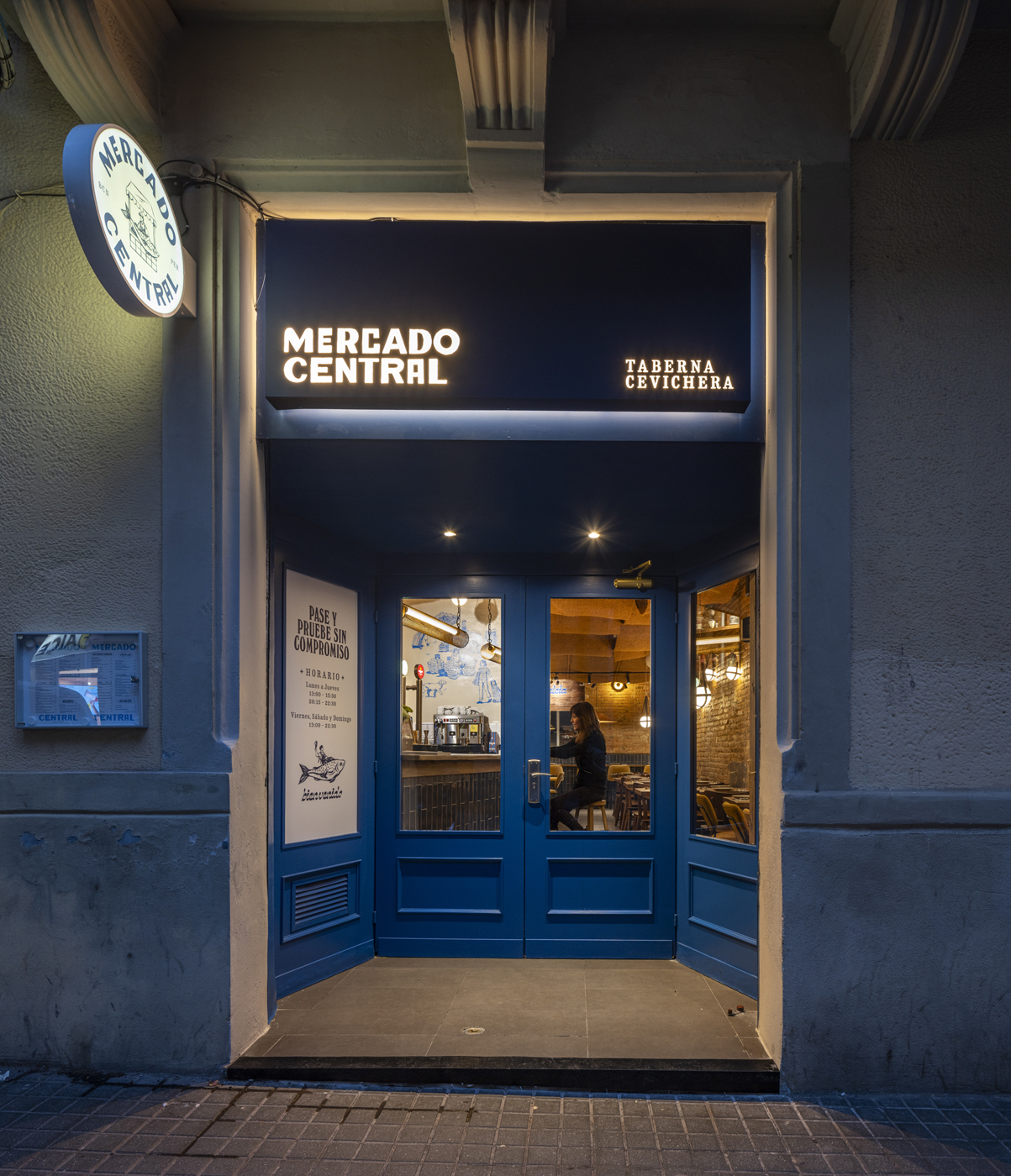
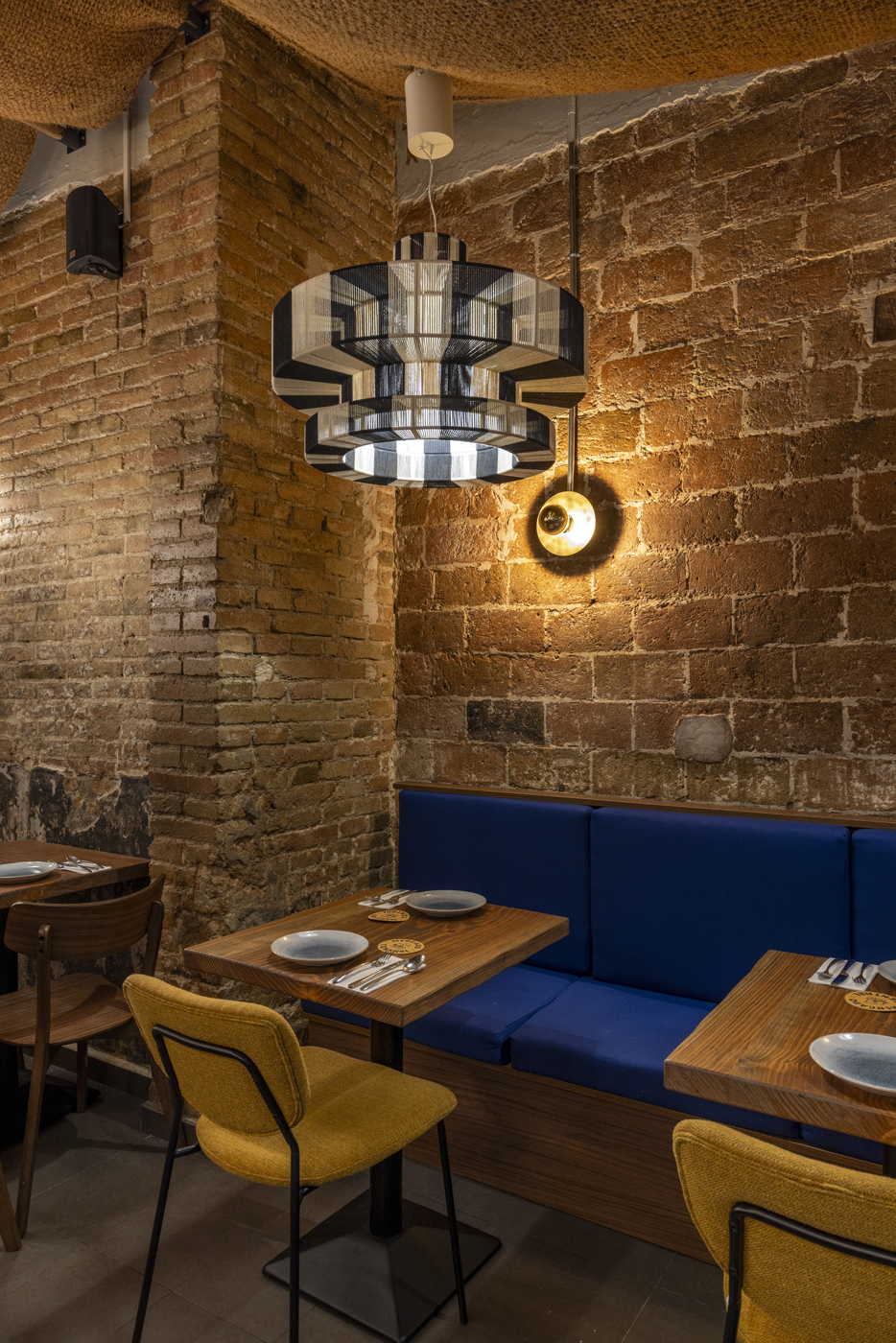
Barcelona’s hospitality sector provides one of the clearest examples of this evolution. Restaurants are no longer competing exclusively through their menus. The atmosphere has become an important part of the proposition.
A customer may choose a restaurant because of its cuisine, but the memory of the visit will also be influenced by the space. The lighting can make an evening feel intimate or energetic. The acoustic environment can determine whether conversation is comfortable. The layout can make a busy restaurant feel organised rather than chaotic. Materials can reinforce the sense of authenticity or sophistication associated with the concept.
This is where Barcelona interior design becomes particularly relevant to hospitality. A restaurant can incorporate local references without turning the interior into a stereotypical representation of the city.
Natural materials, original architectural elements, contemporary interpretations of traditional techniques and carefully considered colour palettes can establish a connection with Barcelona while maintaining a distinctive identity.
The result is a restaurant that belongs to its city without looking like every other restaurant in it.
The same principle applies to hotels.
A hotel in Barcelona is not simply a place where visitors sleep. For many guests, the interior becomes part of their perception of the city itself. The reception, corridors, rooms, restaurant and communal areas contribute to the overall experience.
This creates an interesting opportunity for Barcelona interior designers. Instead of creating generic luxury environments that could exist anywhere in the world, a hotel can use its design to establish a stronger relationship with its location.
That relationship does not necessarily have to be literal. It can emerge through proportions, materials, textures, craftsmanship, colours or the way natural light is handled.
The objective is to create a sense of place without sacrificing contemporary functionality.
Commercial interior design does not stop at the entrance.
In a city such as Barcelona, where many businesses occupy premises directly connected to the public realm, the relationship between façade and interior can have a significant impact on how a business is perceived.
A person walking down the street may encounter a restaurant or shop for only a few seconds. During that time, the façade, signage, entrance, lighting and visibility of the interior communicate a considerable amount of information.
Is the business approachable?
Cities are not defined exclusively by monuments and public buildings. They are also defined by the everyday places where people eat, shop, stay, work and meet.
Restaurants, cafés, hotels and shops contribute continuously to the visual and emotional identity of their neighbourhoods. When these spaces are thoughtfully designed, they can strengthen the character of the city without competing with its architectural heritage.
This is why Barcelona interior design has such an interesting future. The next generation of commercial spaces will need to combine functionality, identity, sustainability, technology and human experience while maintaining a genuine relationship with their surroundings.
The most successful projects will not necessarily be the most extravagant. They will be those capable of creating a clear identity and making people feel that the space belongs exactly where it is.
At INDAStudio, we approach commercial interior design from a strategic perspective. Our work as an interior design studio in Barcelona focuses on understanding the business, its audience, its location and the experience that the brand wants to create before defining the aesthetic language of the space.
We develop projects for restaurants, hotels, cafés, wineries and other commercial environments, integrating spatial planning, materials, lighting, brand identity and sensory experience into a coherent design strategy.
Our methodology is based on strategic neurointeriorism, which allows us to consider not only how a space looks but also how people perceive and experience it.
For us, designing in Barcelona does not mean applying a predefined «Barcelona style». It means understanding the city, the building, the business and the people who will use the space, and bringing all of these elements together in a project with its own identity.
If you are planning a restaurant, hotel, café, winery or commercial space in Barcelona and want the interior to become part of your brand strategy, INDAStudio can help you develop a customised project based on your business objectives and the experience you want to create.
Carrer de Cartagena, 243, Àtic 5ª
08025 Barcelona
Phone: 931 692 454
Phone: 660 34 66 00
Email: info@indastudio.com
Barcelona interior design refers to the design and planning of interior spaces within the specific architectural, cultural and commercial context of Barcelona. Rather than representing a single aesthetic style, it can involve different approaches that respond to the building, location, business and target audience.
Location influences the architecture, natural light, surrounding environment, customer profile and relationship between the business and the street. Understanding these factors allows the interior design to respond more effectively to the specific context of the project.
An interior designer can work on restaurants, hotels, cafés, retail stores, wineries, offices and other commercial environments. Each type of space requires a different approach depending on its operational requirements and the experience it needs to provide.
Interior design can translate the personality and positioning of a brand into a physical environment. Materials, colours, lighting, furniture, spatial organisation and customer journeys can work together to create a consistent experience that customers can recognise and remember.
Interior design addresses aspects such as space planning, functionality, aesthetics, materials and lighting. Neurointeriorism adds an additional focus on how people perceive and experience those environments, considering factors related to emotions, behaviour and sensory perception.
Yes. INDAStudio develops strategic interior design projects in Barcelona for restaurants, hotels, cafés, wineries and other commercial spaces, using a methodology based on strategic neurointeriorism and tailored to the objectives of each business.
Tendencias de interiorismo de otoño: Ideas para transformar espacios comerciales en Barcelona El otoño nos invita a redescubrir los espacios interiores. La luz cambia, los
Interiorismo en Barcelona para el invierno de 2026: Cómo preparar tu espacio comercial Con la llegada del invierno, cambian la luz, la temperatura y la